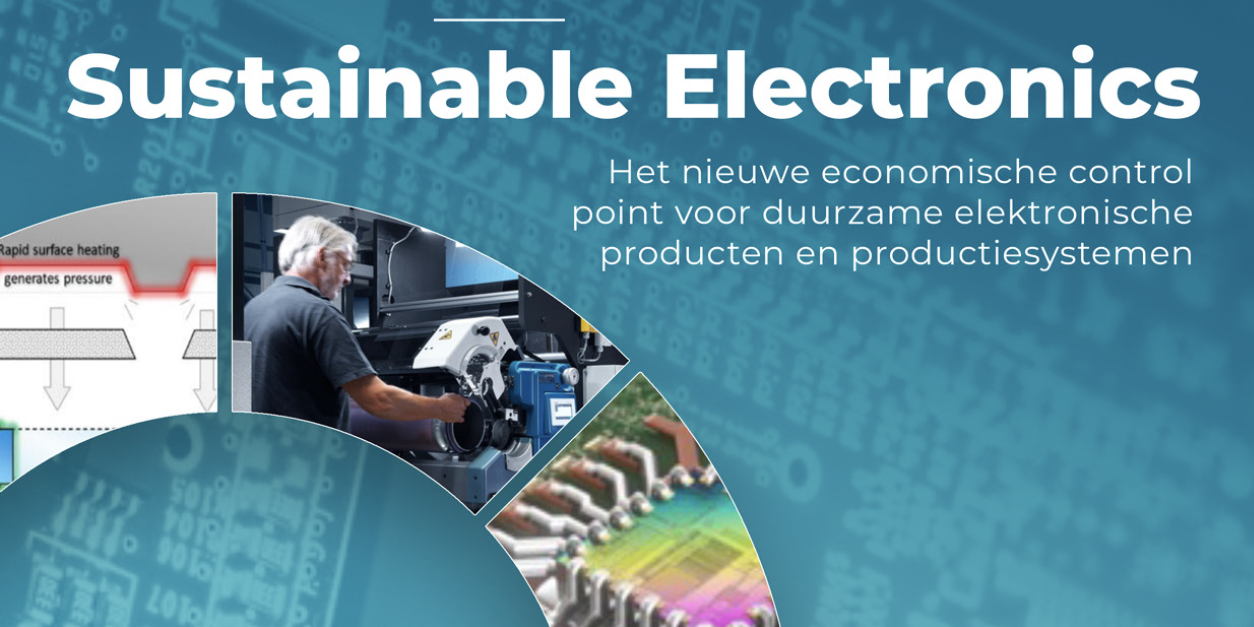
De elektronicamarkt groeit wereldwijd ontzettend snel, wat tegelijkertijd leidt tot steeds meer e-waste door kortere productlevenscycli. Door te investeren in duurzame elektronica en slimme systeemintegratie ontstaat een solide basis voor zowel economische als maatschappelijke waardecreatie. Dit portfolio-project draagt niet alleen bij aan verduurzaming van de elektronicasector, maar ondersteunt ook de bredere transitie naar een circulaire en energie-
efficiënte samenleving. De combinatie van gezamenlijke kennisontwikkeling, product- en marktontwikkeling, en maatschappelijke impact maakt dit project essentieel voor de toekomst van duurzamere technologie.
Zuid-Nederland heeft de technologieën voor Printed Electronics in handen, waarmee elektronicaproductie radicaal kan verduurzamen door minder materiaal- en energiegebruik en meer inzet op hergebruik. Dit is economisch zeer interessant en kan de afhankelijkheid van andere landen, ook buiten de EU, verminderen.
Sustainable Electronics project richt zich op duurzamere elektronische producten en productieprocessen, met een verbeterde milieu impactfactor van minimaal een factor 10 tot 100. DoMicro richt zich op adaptief printen met het ontwikkelen van een multi-toepasbaar printing proces. Daarnaast maakt life cycle assessment, bevordering van de circulaire economie en onderzoek naar hergebruik een belangrijk deel uit van dit proces. Tenslotte zal door de samenwerking tussen project partners het sustainable electronics ecosysteem verder ontwikkelen.
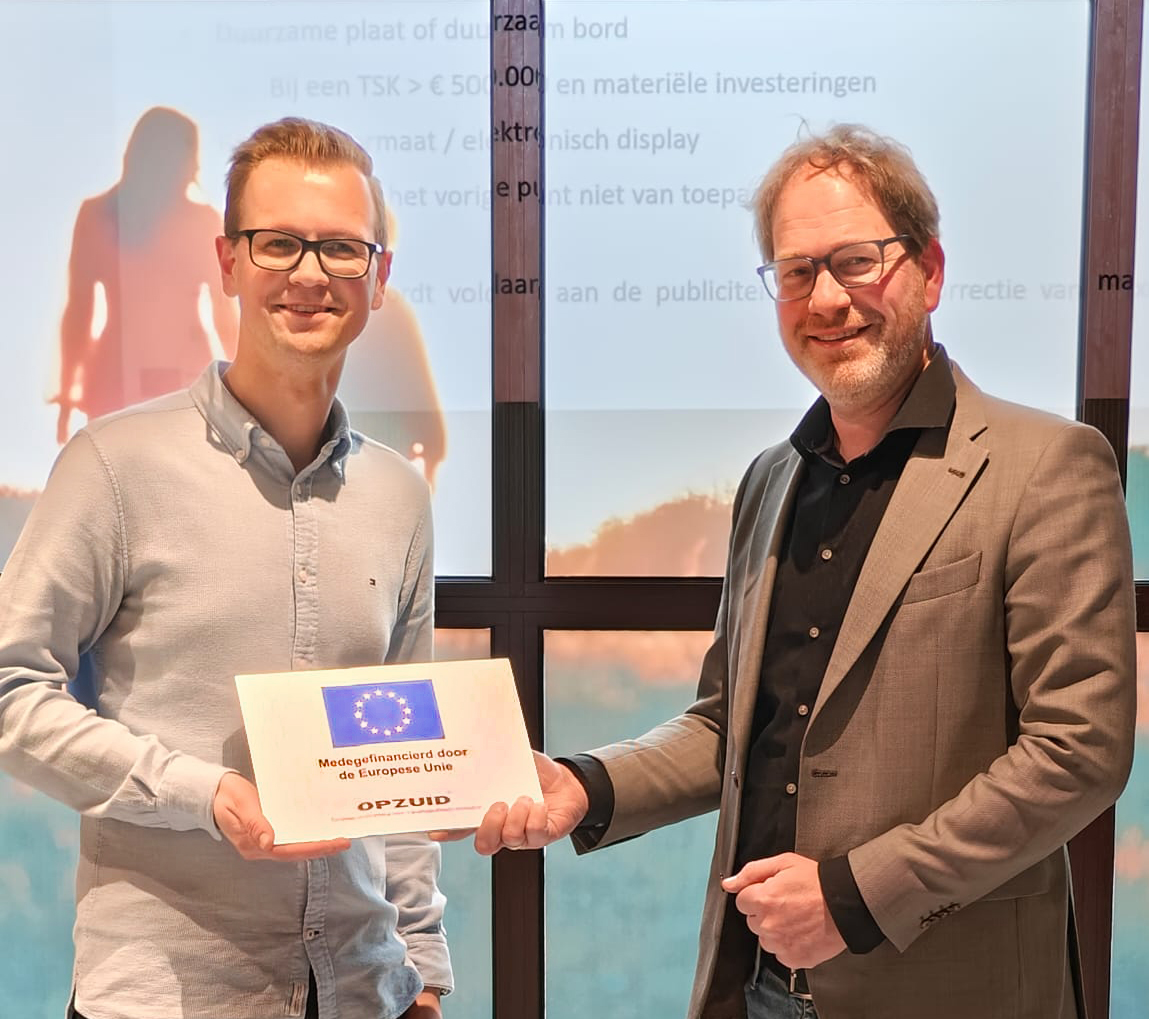
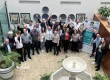
11 februari 2026: Tim Martens, financieel adviseur van Stimulus (links) bevestigt de kick-off met Peter Visser, business developer van DoMicro (rechts).
Een nieuwe standaard voor duurzame elektronika
DoMicro bouwt mee aan een nieuwe standaard voor duurzame elektronica: printed electronics. Waar traditionele PCB-productie grotendeels subtractief is (koper lamineren en vervolgens uitgebreid etsen, met meerdere processtappen, chemicaliën en afvalstromen), bieden additieve printtechnieken een schoon en efficiënt alternatief: je brengt uitsluitend aan wat functioneel nodig is. Denk hierbij niet alleen aan zeefdruk en inkjet, maar ook aan andere digitale printprocessen die geschikt zijn voor opschaling en grootschalige industrialisatie. Deze aanpak leidt tot minder materiaalgebruik, minder afval, lager water- en energieverbruik en een kortere doorlooptijd, terwijl de gewenste performance behouden blijft.
Sterke consortium partners
Een belangrijk en sterk punt is dat we binnen dit Zuid-Nederlandse consortium partners hebben die deze productiestappen niet alleen kunnen ontwikkelen, maar ook digitaal kunnen inrichten en valideren richting hogere volumes. Daarmee zetten we stappen richting concurrerende productie in Europa, met kortere ketens en een grotere strategische onafhankelijkheid.
Sleutelrol voor DoMicro
Binnen het werkpakket Adaptief printen heeft DoMicro een sleutelrol. DoMicro leidt de ontwikkeling van een volledig digitaal, direct print-gebaseerd productieproces voor meerlaagse flex-PCB’s. Concreet gaat het om het printen van een lokale seed-layer, het selectief opbouwen van koperstructuren via selectief plating (aan beide zijden). Daarnaast onderzoekt DoMicro nieuwe functionele inkten, folies, inkjet- en platingtechnieken, inclusief uitlijning en via-structuren. De processen worden vervolgens met demoproducten getest en gevalideerd.
Medegefinancierd door de Europese Unie.

Domicro Project Partner Sustainable Electronics Supported by OPZuid and the European Union
The electronics market is globally growing rapidly, simultaneously leading to increasing amounts of e-waste due to shorter product life cycles. Investing in sustainable electronics and smart system integration creates a solid foundation for both economic and social value creation. This portfolio project not only contributes to the sustainability of the electronics sector but also supports the broader transition to a circular and energy-efficient society. The combination of joint knowledge development, product-and market development, and social impact makes this project essential for the future of sustainable technology.
The Southern Netherlands possesses the technologies for Printed Electronics, which can radically improve the sustainability of electronics production by reducing material and energy consumption and increasing reuse. This is economically very attractive and can reduce dependence on other countries for product purchases.
Sustainable Electronics project focuses on more sustainable electronic products and production processes, with an improved environmental impact factor of at least a factor of 10 to 100. DoMicro focuses on adaptive printing by developing a multi-application printing process. Furthermore, lifecycle assessment, promoting the circular economy, and research into reuse are important components of this process. Finally, the sustainable electronics ecosystem will be further developed through collaboration between project partners.
11 February 2026: Tim Martens, financial advisor of Stimulus (left) confirms the kick-off with Peter Visser, business developer of DoMicro (right).
A new standard for sustainable electronics
DoMicro is helping to build a new standard for sustainable electronics: printed electronics. While traditional PCB production is largely subtractive (laminating copper followed by extensive etching, involving multiple process steps, chemicals, and waste streams), additive printing techniques offer a clean and efficient alternative: you apply only what is functionally necessary. Think not only of screen printing and inkjet, but also of other digital printing processes suitable for scaling up and large-scale industrialization. This approach leads to reduced material usage, less waste, lower water and energy consumption, and shorter lead times, while maintaining the desired performance.
Strong consortium partners
An important and strong point is that within this Southern Netherlands consortium, we have partners who can not only develop these production steps but also digitally configure and validate them for higher volumes. In doing so, we are taking steps towards competitive production in Europe, with shorter supply chains and greater strategic independence.
Key role for DoMicro
DoMicro plays a key role within the Adaptive Printing work package. DoMicro is leading the development of a fully digital, direct print-based production process for multilayer flex PCBs. Specifically, this involves printing a local seed layer and selectively building copper structures via selective plating (on both sides). In addition, DoMicro is investigating new functional inks, foils, inkjet and plating techniques, including alignment and via structures. The processes are subsequently tested and validated using demo products.
Co-funded by the European Union.